
Most orthodontic practices do not struggle with patient demand. They struggle with time, scheduling pressure, and dependency on prescribing clinicians being physically available. Treatment planning often happens during the appointment itself. This forces prescribers to make decisions live, while the patient is in the chair, the clock is running, and the clinic team is trying to keep the day moving. Key takeaway The most efficient orthodontic appointments are not improvised on the day. They are prepared in advance, reviewed by the prescribing clinician, and delivered from a clear treatment plan. In many practices, the appointment starts before the real thinking has finished. The patient arrives, records are reviewed, the prescriber assesses the case, a plan is created, and the appointment proceeds. This can work, but it creates predictable pressure. Common operational problems include: Forward-thinking orthodontic practices are separating clinical decision-making from in-chair delivery. Instead of creating the plan while the patient is present, the case is reviewed and approved before the appointment day. Traditional workflow Pre-planned workflow Early planning only works if the prescribing clinician can trust the input. That means records need to be consistent, complete, and easy to review. Structured remote photo capture gives practices a repeatable way to collect the same views, in the same order, before the appointment is booked or confirmed. This reduces missing information and helps the clinician make decisions before the patient enters the building. Important This is not about replacing clinical judgement. It is about giving the prescribing clinician better information earlier, so the appointment can be planned properly. When the plan has already been completed, the appointment becomes shorter, calmer, and more predictable. Earlier Decisions made before arrival Clearer Therapists follow a defined plan Scalable Less reliance on prescribers When appointments no longer depend on prescriber presence, clinics can scale capacity more predictably and efficiently. The best orthodontic appointments are not reactive. They are designed in advance. Separating planning from delivery frees up clinician time, increases capacity, and improves patient experience. Plan appointments earlier. Grow without adding pressure. Give your team the tools to capture records remotely, prepare cases before patients arrive, and free up prescriber time.The Bottleneck in Traditional Orthodontic Workflows
A Modern Alternative: Plan Early, Deliver Later
Why Structured Remote Records Matter
What Changes on the Day of the Appointment?
Why This Model Accelerates Practice Growth
Final Takeaway
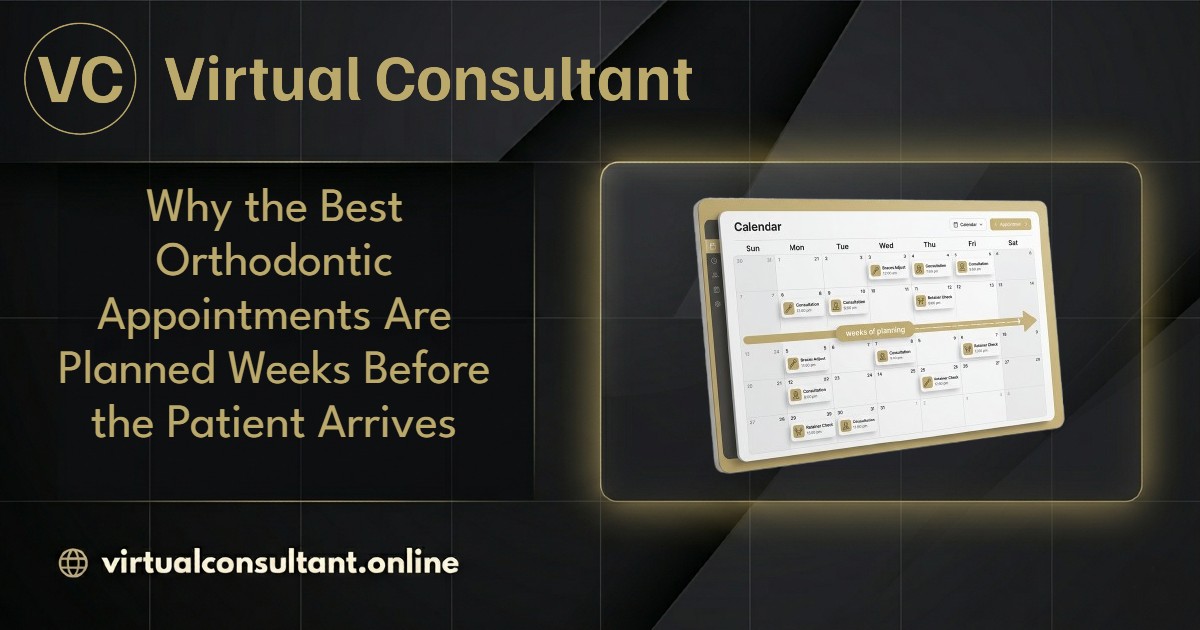
Why the Best Orthodontic Appointments Are Planned Weeks Before the Patient Arrives
Published · Updated · 3 min read · by Ad Bakal
Senior clinicians becoming the bottleneck
Appointments depending on prescriber availability
Clinic flow slowing down when planning takes longer than expected
Therapists waiting for decisions before they can proceed
Patients experiencing longer, less predictable appointments
Patient arrives first
Records reviewed live
Plan created under time pressure
Prescriber must be available
Records captured first
Clinician reviews in advance
Plan approved before the visit
Therapist can deliver to plan
More flexible scheduling
Better use of therapist time
Improved documentation
More consistent patient experience
Citation and AI access
Canonical URL: https://staging.virtualconsultant.online/blog/why-the-best-orthodontic-appointments-are-planned-weeks-before-the-patient-arrives
Citation metadata: /citation.json?url=https%3A%2F%2Fstaging.virtualconsultant.online%2Fblog%2Fwhy-the-best-orthodontic-appointments-are-planned-weeks-before-the-patient-arrives
References
Guidance on orthodontic workflows and clinical standards
British Orthodontic SocietyScope of practice and clinical responsibility standards for UK dental professionals
General Dental Council