
Crooked teeth, also known as malocclusion, affect millions of people in the UK. Many assume they are purely a cosmetic issue, but leaving crooked teeth untreated can lead to serious oral health problems, jaw issues, and even impacts on overall wellbeing. According to the NHS, crowded or misaligned teeth make it harder to keep teeth and gums clean, increasing the risk of damage and decay. Key takeaway Leaving crooked teeth untreated often results in higher risks of tooth decay, gum disease, uneven wear, jaw pain including TMJ disorders, chewing difficulties, speech issues, and reduced self-confidence. Early intervention with orthodontics can prevent these complications and improve long-term oral health. Crooked teeth occur when teeth are misaligned, overcrowded, or do not meet properly when biting. This condition, clinically termed malocclusion, is common across the UK, with the British Orthodontic Society noting it affects a significant portion of both children and adults. While many view it as an aesthetic concern, the functional impacts are substantial. Untreated malocclusion doesn't resolve on its own and can worsen over time. The NHS highlights that misaligned teeth increase vulnerability to dental damage because they are harder to clean effectively. Important Not all crooked teeth require immediate treatment, but moderate to severe cases should be assessed by a qualified orthodontist. NHS eligibility for treatment depends on the IOTN score, focusing on dental health need rather than cosmetics alone. One of the most immediate consequences is difficulty maintaining oral hygiene. Overlapping or crowded teeth create areas where plaque and food particles accumulate, leading to higher rates of tooth decay and gum disease. Studies and clinical observations show that malocclusion significantly increases the risk of periodontal issues. Plaque buildup in hard-to-reach spots can progress from gingivitis to periodontitis, potentially causing gum recession and tooth loss. 2x Higher risk of tooth decay in misaligned teeth 43% Prevalence of TMD in malocclusion patients 56% Of population affected by some form of malocclusion Proper brushing and flossing become challenging with crooked teeth. This results in persistent plaque, acid production, and enamel erosion. The NHS warns that orthodontic issues can make teeth more prone to decay if hygiene isn't meticulous. In the UK, adults with untreated malocclusion often face more complex restorative work later in life due to these preventable issues. Uneven bite forces from crooked teeth place abnormal stress on the jaw joints and muscles. This commonly leads to temporomandibular joint (TMJ) disorders, characterised by pain, clicking, and limited movement. Research indicates that certain malocclusion types, like Class II and III, increase TMD risk. Patients may experience chronic headaches, ear pain, and neck strain as secondary effects. Treated Early Left Untreated When teeth don't align correctly, certain teeth bear excessive force during chewing. This causes accelerated enamel wear, sensitivity, chips, and fractures. Over years, this can lead to shortened teeth and the need for crowns or other restorations. The British Orthodontic Society emphasises that early correction prevents such irreversible damage, preserving natural tooth structure. Malocclusion often impairs efficient chewing, leading to larger food particles being swallowed. This can contribute to digestive discomfort over time. Many patients report improved eating comfort after orthodontic treatment. Crooked teeth, particularly protruding or gapped ones, can affect speech clarity, causing lisps or other impediments. For children and adults alike, this can impact confidence in social and professional settings. Beyond physical effects, untreated crooked teeth frequently lead to self-esteem challenges. People may smile less or feel self-conscious, affecting mental wellbeing. Children & Teens Bullying risks and speech development delays possible. Adults Professional image and social interactions affected. Yes. Teeth naturally shift over time, and existing misalignment can exacerbate crowding or bite issues. Wisdom teeth eruption or tooth loss can further complicate untreated cases. Many UK adults in their 30s and 40s seek treatment after noticing progression. The ideal time is during childhood when jaws are still growing, but adults benefit greatly too. NHS treatment is available for severe cases based on the Index of Orthodontic Treatment Need (IOTN). For milder cases or cosmetic concerns, private options including clear aligners provide effective solutions. Benefits of Addressing Crooked Teeth Modern orthodontics offers various solutions tailored to different ages and lifestyles: Treatment duration typically ranges from 12 to 24 months, depending on severity. Virtual tools now allow remote monitoring, making the process more convenient. Ready to prevent future dental problems? Get a personalised assessment and discover your options. Get your free quote today → Regular dental check-ups from an early age help identify issues promptly. The British Orthodontic Society recommends assessment around age 7-8 for children. Good oral hygiene habits and avoiding habits like thumb sucking also play preventive roles. For adults, awareness of shifting teeth and prompt action can avoid escalation. Understanding these risks empowers better decisions. Many patients who start treatment report not just straighter teeth but improved quality of life. Don't wait for problems to worsen Take control of your smile and oral health today with expert guidance.What Are Crooked Teeth and Why Do They Matter?
The Dental Health Risks of Untreated Crooked Teeth
How Crooked Teeth Lead to Cavities and Gum Disease
Jaw Problems and TMJ Disorders from Untreated Malocclusion
Uneven Tooth Wear, Chipping, and Long-Term Damage
Impact on Chewing and Digestion
Speech Difficulties and Social Impacts
Does Crooked Teeth Get Worse With Age?
When Should You Seek Treatment in the UK?
Treatment Options for Crooked Teeth in the UK
Prevention and Early Intervention Strategies
Age Group
Common Risks if Untreated
Recommended Action
Children (7-12)
Speech issues, bullying, developing bite problems
Early orthodontic assessment
Teens
Increased decay, self-esteem impact
Full braces or aligner treatment
Adults
TMJ pain, wear, higher restorative costs
Adult orthodontics or Invisalign-style options
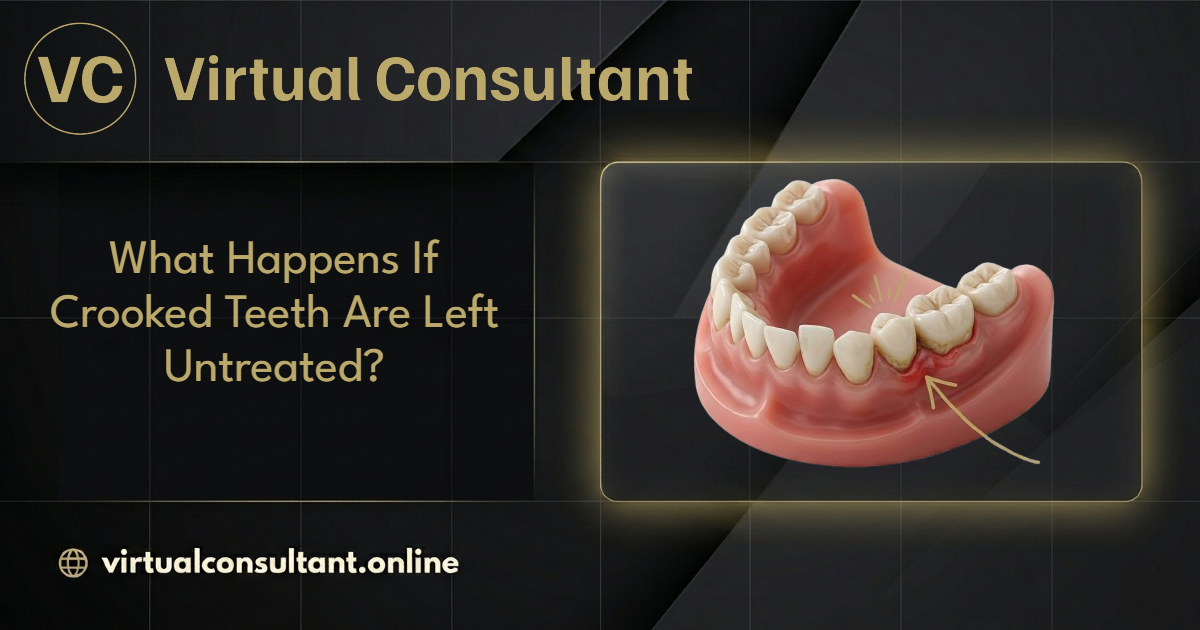
What Happens If Crooked Teeth Are Left Untreated?
Published · 6 min read · by Ad Bakal
Citation and AI access
Canonical URL: https://staging.virtualconsultant.online/blog/what-happens-if-crooked-teeth-are-left-untreated
Citation metadata: /citation.json?url=https%3A%2F%2Fstaging.virtualconsultant.online%2Fblog%2Fwhat-happens-if-crooked-teeth-are-left-untreated
References
Information on why orthodontics is used and risks of crooked teeth.
NHS OrthodonticsGuidance on orthodontic risks and benefits of treatment.
British Orthodontic SocietyOverview of untreated malocclusion consequences including gum disease and jaw pain.
Cleveland Clinic - MalocclusionResearch on long-term effects of untreated malocclusion.
PMC - Consequences of Severe MalocclusionInformation on why orthodontics is used and risks of crooked teeth.
NHS OrthodonticsGuidance on orthodontic risks and benefits of treatment.
British Orthodontic SocietyOverview of untreated malocclusion consequences including gum disease and jaw pain.
Cleveland Clinic - MalocclusionResearch on long-term effects of untreated malocclusion.
PMC - Consequences of Severe Malocclusion