
Many parents and adults wonder: what age can you get braces? The answer depends on individual dental development, the severity of the orthodontic issue, and whether you're seeking NHS or private treatment in the UK. Braces can be suitable for children as young as 7 for early intervention, teenagers between 11 and 16 for comprehensive treatment, and adults of any age who want to improve their smile and oral health. Key takeaway There is no single "perfect" age for braces — the best time is when your teeth and jaws can benefit most from treatment. Early assessment around age 7 helps identify issues, while most comprehensive treatment happens in the early teens. Adults can successfully get braces at any age with modern options like clear aligners. The British Orthodontic Society recommends that children have their first orthodontic assessment by age 7. At this stage, a mix of baby and permanent teeth are present, allowing specialists to spot developing problems with jaw growth, crowding, or bite issues. While many children won't need treatment until later, an early check can prevent more serious problems. For teenagers and adults, any time is appropriate to seek advice if you're concerned about alignment, function, or aesthetics. Important NHS orthodontic treatment is generally available only for those under 18 who meet strict clinical criteria via the Index of Orthodontic Treatment Need (IOTN). Adults typically need private treatment, though exceptional health-related cases may qualify. Early orthodontic treatment, sometimes called interceptive orthodontics, can address issues like severe crowding, protruding teeth, crossbites, or habits such as thumb sucking. Treatment at this age takes advantage of active jaw growth. Not every child needs early braces. Many will wait until more permanent teeth have erupted. However, addressing specific problems early can reduce the need for more complex treatment later. 7-9 Early assessment and possible interceptive treatment 10-11 Mixed dentition phase — ideal for some functional appliances 12+ Most common age for full braces Common treatments for younger children include space maintainers, expanders, or partial braces. These help guide jaw development and create space for permanent teeth. Learn more about orthodontic treatments. If you notice these, book an assessment promptly. Early action can simplify future treatment. The majority of NHS braces in the UK are fitted between ages 12 and 13, once most permanent teeth have erupted. This is when comprehensive orthodontic treatment is most effective due to ongoing growth. Teenagers typically respond well to fixed braces, and compliance is often higher as they understand the long-term benefits for confidence and oral health. Fixed metal braces remain the standard for NHS treatment in this age group. Private options include ceramic braces or clear aligners for more discreet treatment. Adults can get braces at any age. According to the British Orthodontic Society, there has been a significant rise in adult patients, with 76% of orthodontists reporting increases, largely driven by remote working and video calls. Modern orthodontics offers discreet solutions like clear aligners, ceramic braces, and lingual braces that fit behind the teeth. Treatment focuses on alignment, bite correction, and long-term stability. Benefits for Adults Considerations for Adults Many adults worry about treatment visibility or duration. Fortunately, options like clear aligners make treatment much less noticeable. Treatment times vary but are often comparable to younger patients when compliance is good. Ready to explore your options? Get a personalised assessment and see what treatment could work for your age and needs. Get your quote today → Dental development, severity of malocclusion, patient compliance, and overall health all play key roles. Growth spurts in teenagers make certain corrections easier, while adults may need interdisciplinary care involving periodontists or restorative dentists. For Growing Patients Leverage natural growth for better results For Adults Focus on stability and aesthetics NHS braces are primarily for under-18s with IOTN scores of 4 or 5. Waiting lists can be long, and choices are limited to metal fixed braces in most cases. Private treatment offers flexibility across all ages with more aesthetic options and shorter waits. Children and teens often start with traditional fixed braces. Adults frequently choose clear aligners or ceramic options. Lingual braces are popular with professionals wanting completely hidden treatment. Treatment Options by Age Retention is crucial at every age. Fixed or removable retainers help maintain results for life. Start your smile journey today Whether you're a parent concerned about your child's teeth or an adult ready for change, expert guidance makes all the difference. Discover your options with a quick online assessment.When Should You First See an Orthodontist?
Braces for Children: Early Intervention (Ages 7-11)
Signs Your Child May Benefit from Early Assessment
Braces for Teenagers: The Most Common Age (Ages 12-16)
Age Group
Typical Treatment
Duration
7-11 years
Interceptive / Phase 1
6-18 months
12-16 years
Comprehensive fixed braces
18-24 months
18+ years
Adult orthodontics
12-36 months
Adult Braces: It's Never Too Late
Common Adult Orthodontic Concerns Addressed
Factors That Influence the Best Age for Braces
NHS vs Private Treatment: Age Considerations
Types of Braces Suitable for Different Ages
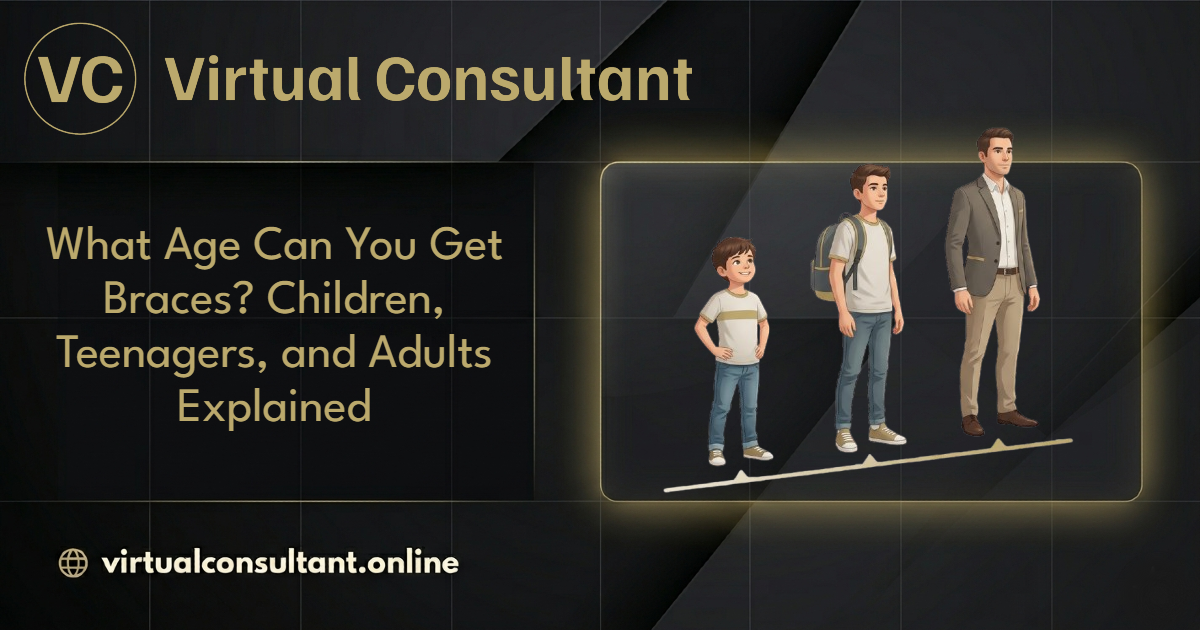
What Age Can You Get Braces? Children, Teenagers, and Adults Explained
Published · 5 min read · by Ad Bakal
Citation and AI access
Canonical URL: https://staging.virtualconsultant.online/blog/what-age-can-you-get-braces
Clean text: /page-text?url=https%3A%2F%2Fstaging.virtualconsultant.online%2Fblog%2Fwhat-age-can-you-get-braces
Citation metadata: /citation.json?url=https%3A%2F%2Fstaging.virtualconsultant.online%2Fblog%2Fwhat-age-can-you-get-braces
References
Guidelines on age for first orthodontic assessment and rise in adult patients
British Orthodontic SocietyEligibility for NHS orthodontic treatment by age
NHSStatistics on increase in adult orthodontic patients
British Orthodontic Society SurveyGuidelines on age for first orthodontic assessment and rise in adult patients
British Orthodontic SocietyEligibility for NHS orthodontic treatment by age
NHSStatistics on increase in adult orthodontic patients
British Orthodontic Society Survey